
Heart problems rarely appear without warning. Chest discomfort, fatigue, dizziness, breathlessness, or irregular heartbeats are common symptoms doctors investigate through an electrocardiogram.
In today’s stressful lifestyles, these signs are often ignored. What feels like tiredness or acidity may signal heart trouble. A simple ECG in South Kolkata at Reliable Diagnostics can quickly reveal whether your heart rhythm is functioning normally.
Understanding the common symptoms needing ECG testing can help protect not only your own health but also your family’s peace of mind.
Let’s dive in.
What is an ECG Test and Why is it Important?
An ECG (Electrocardiogram) records the heart’s electrical activity and rhythm through small electrodes attached to the chest. This quick and painless test helps doctors identify irregular heartbeats, signs of a heart attack, and abnormalities in blood flow.
The heart functions through electrical signals that coordinate each heartbeat. If these signals become irregular, the heart’s rhythm can change.
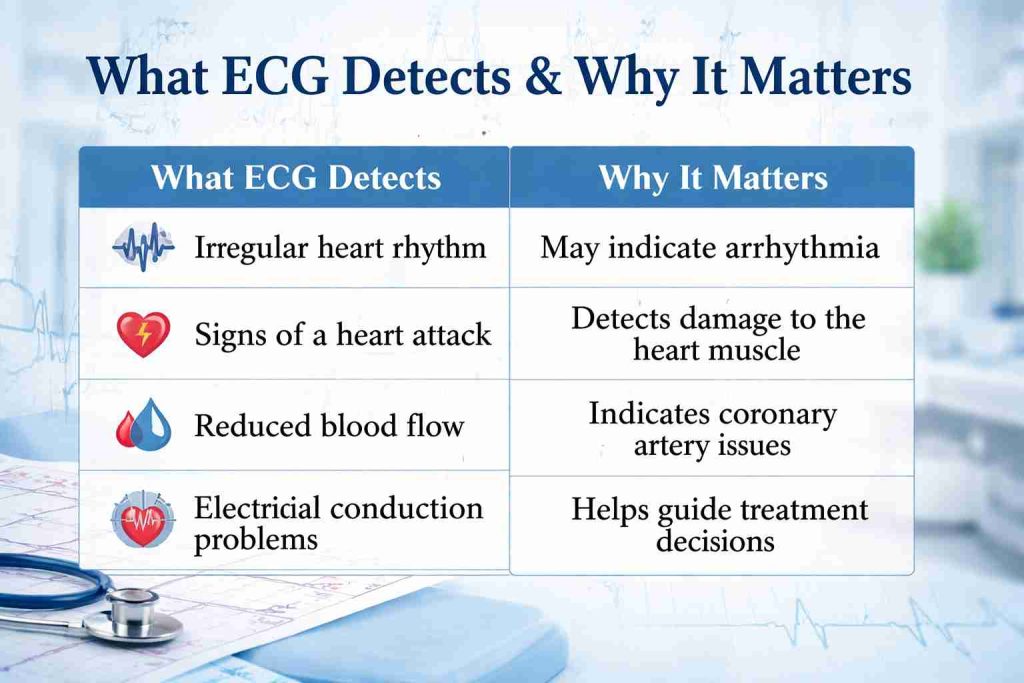
Due to its accuracy and speed, doctors often recommend an ECG during routine heart checkups or when patients report symptoms linked to heart problems.
Why You Should Not Ignore Early Heart Disorder Symptoms
Early heart disorder symptoms often appear mild but can signal deeper problems. Chest discomfort, unusual fatigue, dizziness, or breathlessness may indicate that the heart is under strain. In India, heart disease is rising due to stress, sedentary lifestyles, diabetes, and high blood pressure.
Ignoring these warning signs delays diagnosis and treatment. Seeking a timely medical evaluation when symptoms appear helps detect problems early and significantly reduces the risk of serious cardiac complications.
Common heart checkup symptoms that people often overlook include:
These may appear minor, and many overlook them in their daily lives.
- Mild chest pressure is mistaken for acidity
- Breathlessness during routine activities
- Sudden fatigue without a clear reason
- Occasional dizziness or palpitations
However, they are often the signs that you need an ECG test evaluation before symptoms worsen
Top 10 Symptoms That Indicate You Require an ECG Test
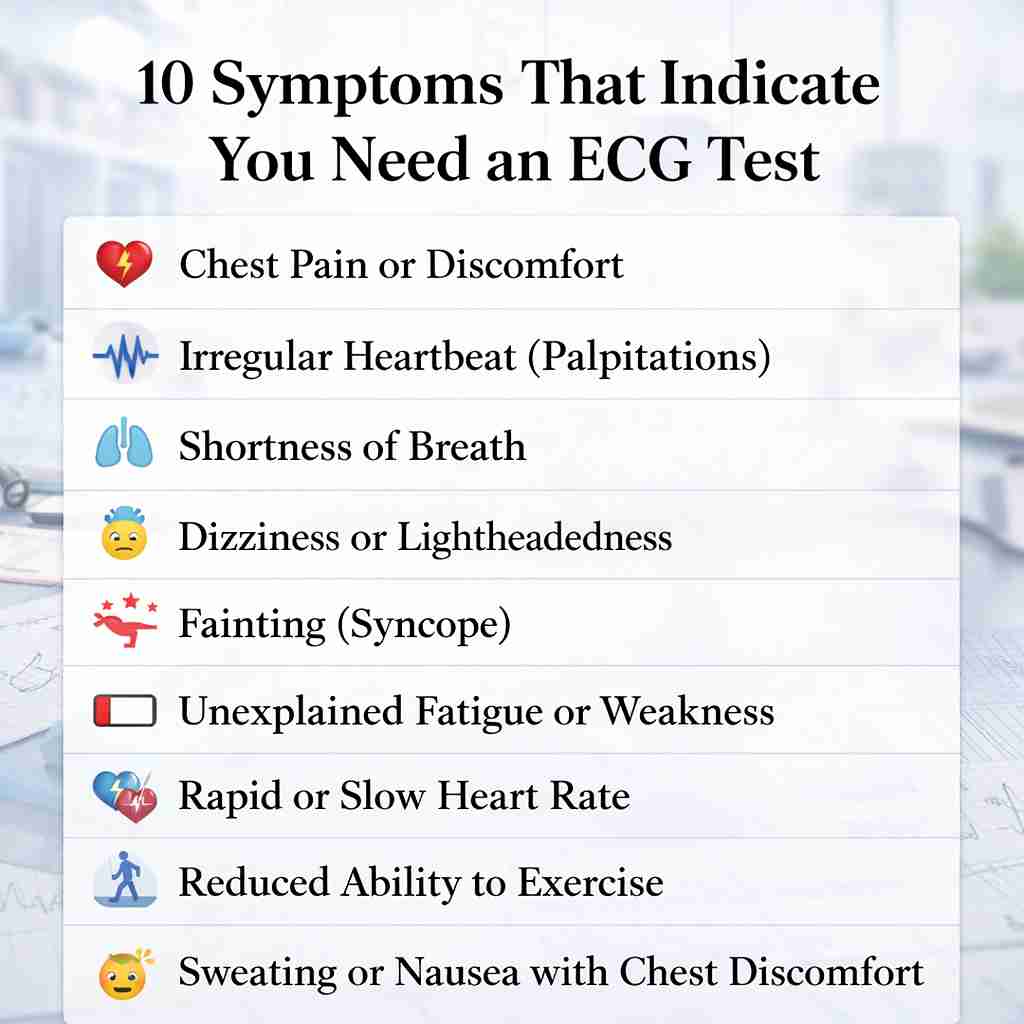
Heart symptoms can vary from mild discomfort to serious warning signs. Below are the top signs that often prompt doctors to recommend an ECG evaluation.
1. Chest Pain or Discomfort
Chest pain is one of the most important warning signs of heart problems. It may feel like pressure, heaviness, squeezing, or burning in the chest.
Pain that spreads to the arm, jaw, neck, or back is particularly concerning and may indicate reduced blood flow to the heart muscle.
Doctors often recommend an ECG test for chest pain because it helps detect abnormalities in heart rhythm and signs of a heart attack.
| Chest Pain Type | Possible Concern |
| Pressure in the centre of the chest | Coronary artery disease |
| Pain radiating to the arm/jaw | Possible heart attack |
| Chest tightness during exertion | Reduced blood flow |
2. Irregular Heartbeat (Palpitations)
Palpitations feel like fluttering, pounding, or racing of the heart. Many people describe it as the heart “skipping beats.”
While occasional palpitations can occur due to stress or caffeine, a persistent irregular rhythm may indicate arrhythmia.
If you need an ECG in South Kolkata, trust Reliable Diagnostics to analyse the heart’s electrical pattern and identify abnormal rhythms.
3. Shortness of Breath
Difficulty breathing during normal activities or even at rest can indicate that the heart is not pumping efficiently.
Reduced cardiac output can cause fluid buildup in the lungs, making breathing difficult. An ECG test helps doctors check if heart rhythm abnormalities are contributing to breathlessness.
4. Dizziness or Lightheadedness
Frequent dizziness may occur when the brain temporarily receives less blood flow. Heart rhythm disturbances can disrupt circulation, causing lightheadedness or near-fainting episodes.
Doctors often investigate all heart-related problems and symptoms via an ECG to rule out underlying cardiac causes.
5. Fainting (Syncope)
Sudden loss of consciousness is always a serious warning sign. It may occur when the heart fails to maintain adequate blood flow to the brain.
Syncope may indicate:
- Abnormal heart rhythm
- Structural heart problems
- Severe blood pressure fluctuations
An ECG is usually one of the first tests recommended to evaluate the cause.
6. Unexplained Fatigue or Weakness
Feeling unusually tired after minimal effort may indicate reduced heart efficiency. When the heart struggles to pump blood effectively, muscles and organs receive less oxygen. This can cause persistent weakness and fatigue.
To determine whether heart rhythm abnormalities are contributing to the problem, trust the doctors at Reliable Diagnostics for an ECG in South Kolkata.
7. Rapid or Slow Heart Rate
A heart rate that is consistently too fast (tachycardia) or too slow (bradycardia) may signal electrical conduction problems.
| Heart Rate Pattern | Medical Term |
| Above 100 beats/min | Tachycardia |
| Below 60 beats/min | Bradycardia |
An ECG helps doctors identify whether these patterns are temporary or linked to underlying heart conditions.
8. Reduced Ability to Exercise
People sometimes notice they cannot exercise as easily as before. Walking short distances or climbing stairs becomes unusually tiring. This reduction in stamina can indicate early cardiac dysfunction.
ECG doctors may recommend the test to evaluate heart performance during routine activity.
9. Family History of Heart Disease
Individuals with a family history of heart disease may need preventive heart monitoring even without obvious symptoms. To assess heart rhythm patterns and detect silent abnormalities early, a cardiologist may recommend an ECG test.
Preventive ECG screening becomes particularly important if close relatives have experienced heart attacks or arrhythmias.
10. Sweating or Nausea with Chest Discomfort
Sudden sweating, nausea, or vomiting combined with chest discomfort can be a warning sign of a heart attack. These symptoms should never be ignored.
Immediate medical evaluation and an ECG are often required to confirm whether the heart muscle is under stress.
When Should You Get an ECG Test Immediately?
Emergency situations that require immediate testing include:
- Severe or persistent chest pain
- Sudden fainting or collapse
- Severe breathlessness
- Rapid or irregular heartbeat with dizziness
These symptoms indicate when to get an ECG test without delay, as early diagnosis can prevent life-threatening complications.
Who Should Consider Regular ECG Screening?
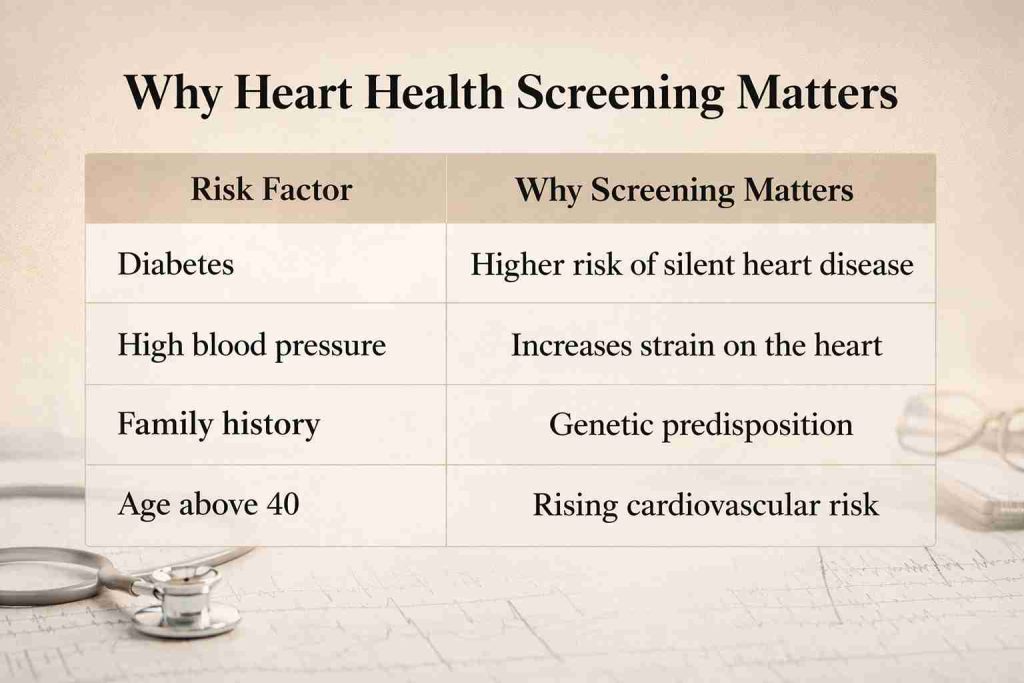
Regular ECG screening may be recommended for individuals with higher cardiovascular risk.
People with diabetes, high blood pressure, a family history of heart disease, or an age above 40 often benefit from periodic heart monitoring.
ECG Test in Kolkata – When to Visit a Doctor?
Modern lifestyles can quietly strain heart health. Frequent chest discomfort, palpitations, or breathlessness should never be ignored. Many patients begin evaluation with an ECG test in Kolkata to assess heart rhythm and electrical activity.
People often search for the cost of an ECG test before booking. Fortunately, an ECG is one of the most affordable and widely available cardiac diagnostic tools.
What Happens During an ECG Test?
An ECG test from Reliable Diagnostics in South Kolkata is simple, painless, and usually completed within five to ten minutes. Small adhesive electrodes are placed on the chest, arms, and legs to record the heart’s electrical activity.
Steps involved in the procedure:
- Electrodes are attached to the skin
- Electrical signals from the heart are recorded
- The machine produces a waveform graph
- Doctors analyse the rhythm pattern
There is no injection, radiation, or discomfort involved. The test is safe for people of all ages and is often recommended during routine heart evaluations.
Don’t Ignore the Warning Signs
Heart disease often develops quietly, but the body rarely stays silent forever. Chest pain, dizziness, breathlessness, or sudden fatigue should never be ignored. An ECG quickly reveals how the heart is functioning.
If symptoms appear, visit Reliable Diagnosticsand speak to an expert about procedures such as an ECG in South Kolkata.
Book an appointment today.
People Also Ask
What symptoms require an ECG?
Chest pain, palpitations, dizziness, fainting, breathlessness, and unexplained fatigue often require an ECG to check heart rhythm and electrical activity.
What are 5 signs of heart failure?
Shortness of breath, persistent fatigue, swelling in legs or ankles, rapid heartbeat, and difficulty exercising are common signs of heart failure.
How to know if an ECG test is necessary?
If you experience chest discomfort, irregular heartbeat, dizziness, fainting, or breathlessness, doctors may recommend an ECG to evaluate heart function.
What are three reasons a doctor would order an ECG?
Doctors order ECGs to check irregular heart rhythms, investigate chest pain or heart attack signs, and monitor heart health conditions.
