
Fever that keeps returning, infections that don’t fully go away, or unexplained weakness often signal that the body is fighting something deeper.
Many people spend weeks guessing. They try medicines, wait for symptoms to pass, then fall sick again. Accurate testing often becomes the turning point between confusion and clarity.
Serology tests look for antibodies in the blood, helping doctors understand whether a person was recently infected or exposed to certain pathogens.
If you are from the city, protect yourself by quickly getting an evaluation at Reliable Diagnostics, a trusted diagnostic centre in South Kolkata.
Let’s talk about how serology testing helps detect the real cause behind recurrent fevers, infections of weakness.
So, get clarity before moving forward with treatment decisions.
When Serology Helps Most
Serology testing becomes useful when symptoms persist or return without a clear cause. By detecting antibodies in the blood, doctors can identify clues about recent infections or past exposure to specific pathogens.
When fever, fatigue, or weakness lingers beyond a few days, the body’s immune response leaves traces in the bloodstream. Serology helps interpret those clues. Instead of relying on guesswork, clinicians can narrow down possibilities and guide treatment with better precision.
In real clinical practice, serology often becomes part of a larger investigation. Doctors may combine it with other blood tests, clinical examination, and patient history to determine why symptoms continue.
Serology Testing: What It Is and What It Reveals
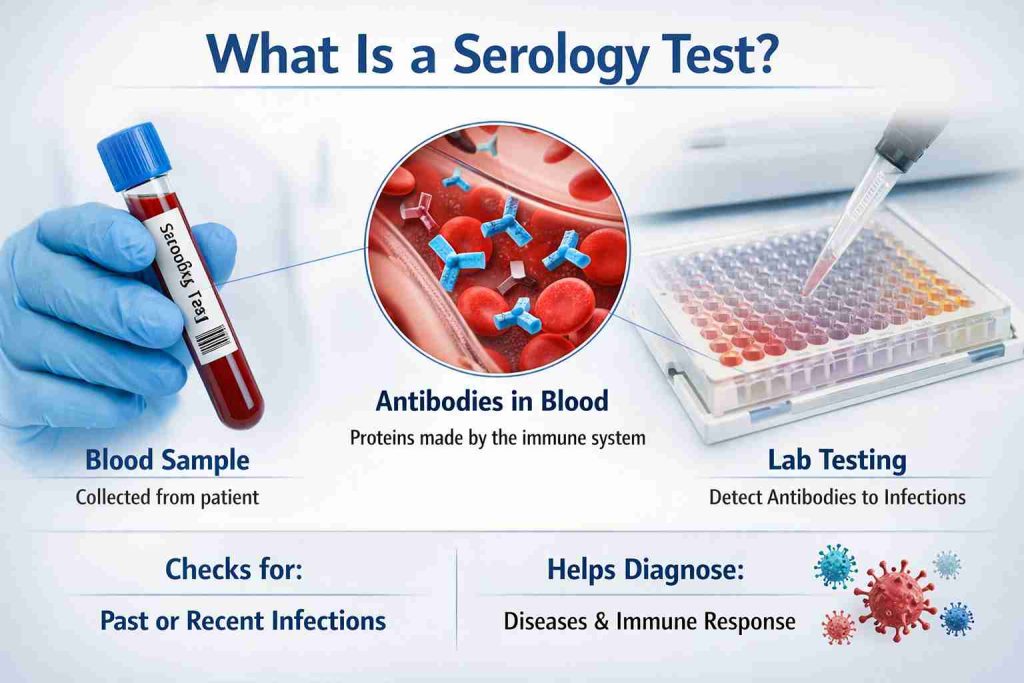
Serology refers to blood tests that detect antibodies produced by the immune system in response to infections or other immune triggers. These antibodies act like biological footprints showing that the body has encountered a pathogen.
What it measures (antibodies in blood)
To understand the meaning of a serology test, it helps to know what antibodies do. When bacteria or viruses enter the body, the immune system creates proteins called antibodies to fight them.
These antibodies circulate in the blood and can remain detectable for weeks, months, or sometimes years.
| Component | What It Shows | Why It Matters |
| Antibodies | Immune response to infection | Indicates exposure or immune activity |
| IgM antibodies | Usually appear earlier | Suggests recent infection |
| IgG antibodies | Appear later and last longer | Suggests past infection or recovery |
Serology testing works by detecting these antibodies and interpreting their pattern.
What it can and can’t tell you
A serology test for infection can reveal whether the body has reacted to a particular pathogen. However, interpretation must always consider timing and symptoms.
“Not every illness is best diagnosed by antibodies alone.”
For example, very early infections may not yet produce detectable antibodies. That is why doctors sometimes use other tests during the first few days of illness.
Why Recurring Fever or Weakness Needs Proper Testing
Recurring symptoms often create uncertainty. Many infections initially look similar: fever, body ache, fatigue, or weakness.
The core problem: many infections look the same at first
Early symptoms of several infections overlap:
- Fever and chills
- Muscle pain
- Weakness or fatigue
- Headache
- Loss of appetite
Without proper testing, it becomes difficult to identify the exact cause. This is why doctors often evaluate recurrent fever causes carefully instead of assuming it is a simple viral illness.
Why guessing + random antibiotics can backfire
Self-medication is common. But antibiotics only work against bacterial infections. Many recurring fevers in India are caused by viruses.
Using unnecessary antibiotics can lead to:
- Delayed diagnosis
- Drug resistance
- Temporary masking of symptoms
Instead, a clinician may recommend targeted tests from a reliable diagnostic centre to determine the actual cause.
Common Clinical Uses of Serology Testing

Serology testing is often used when symptoms persist or when doctors suspect specific infectious diseases.
Fever that keeps coming back (or lasts longer than expected)
If fever lasts for several days or returns repeatedly, doctors may order investigations including a blood test to rule out infections that may not appear immediately in routine tests.
Common symptoms that prompt evaluation include:
- Fever lasting more than 5–7 days
- Fatigue or persistent weakness that persists
- Recurrent episodes of fever after recovery
In such cases, clinicians may also recommend blood tests to understand whether infection, inflammation, or immune activity is involved.
Suspected “tropical” infections
In Indian tropical regions, certain infections are more common during monsoon or seasonal outbreaks.
Doctors may consider tests such as:
| Infection suspected | Serology test |
| Dengue | dengue igG /igM test |
| Chikungunya | chikungunya igM test |
| Typhoid | widal test for typhoid (when required) |
| Mixed tropical infections | tropical fever panel test |
These tests are not diagnoses by themselves. They simply help doctors identify patterns that guide further clinical decisions.
Understanding IgM vs IgG
Antibody reports often confuse patients. Most reports mention IgM and IgG, but the difference between them matters.
IgM = usually recent/ongoing infection clue
IgM antibodies usually appear earlier in the immune response. Their presence may suggest a recent or active infection.
| Marker | Typical Meaning |
| IgM positive | Possible recent infection |
| IgM negative | Infection may not be recent |
However, timing is crucial. A test taken too early might still show negative results even if infection exists.
IgG = usually past exposure / later response clue
IgG antibodies appear later but last longer.
| Marker | Typical Meaning |
| IgG positive | Past exposure or later immune response |
| IgG negative | No detectable past exposure |
Doctors interpret these results together with symptoms. The same report can mean different things depending on when the test was taken and how the patient is feeling.
Timing Matters: When Serology Is Most Accurate

Serology tests work best after the immune system has had enough time to produce antibodies. If testing is done too early, results may appear negative even when infection is present.
Early illness may need antigen/PCR instead of antibodies
In the first few days of illness, doctors may prefer antigen tests or PCR tests instead of antibody tests.
| Stage of illness | Preferred approach |
| First few days | Antigen or PCR testing |
| After immune response begins | Serology antibody testing |
| Later recovery phase | IgG antibody detection |
The reason is simple: the body may not have produced detectable antibodies yet.
In clinical settings, physicians often combine test timing with symptom history before recommending investigations from a diagnostic centre.
When to See a Doctor Urgently
Some symptoms require immediate medical attention, especially when fever or infection worsens.
Red flags with fever
Seek urgent medical care if fever is accompanied by:
- Severe weakness or inability to stand
- Persistent vomiting or dehydration
- Breathing difficulty
- Confusion or unusual drowsiness
- Bleeding from gums or nose
- Very high fever lasting several days
These symptoms may indicate complications that require prompt evaluation.
What a Doctor May Order Along With Serology
Serology rarely stands alone. Doctors usually combine it with basic blood investigations to understand the full picture.
Basic blood markers + targeted tests
Common supportive tests include:
| Test | What it helps detect |
| CBC | Infection, inflammation, anaemia |
| CRP or ESR | Inflammatory activity |
| Liver function tests | Effects of infection on liver |
| Serology tests | Antibody response to specific pathogens |
This approach prevents unnecessary testing while helping clinicians narrow down possible causes.
In many cases, patients visit a diagnostic centre for these evaluations because they offer both routine and specialised testing under one roof.
Serology Tests in Kolkata: A Final Word on Finding the Cause
Tests such as dengue IgG/IgM are widely available, but results should always be reviewed alongside symptoms and medical history.
When recurring fever, infection, or unexplained weakness persists, choosing Reliable Diagnostics, a trusted diagnostic centre in South Kolkata ensures that tests are performed accurately and interpreted responsibly. Early investigation often leads to earlier treatment, helping families regain peace of mind sooner.
Book an appointment today.
People Also Ask
Can serology tell if my infection is happening right now?
Sometimes. IgM antibodies may suggest a recent infection, but timing matters. Doctors usually interpret serology together with symptoms and other test results before confirming an active infection.
Why did my report show IgG positive but I still feel sick?
IgG antibodies often indicate past exposure. Feeling sick despite IgG positivity may mean another illness is present, or the body is still recovering. A doctor must evaluate the full clinical picture.
Should one self-order a “fever panel”?
It is usually better to consult a doctor first. Testing should match symptoms and timing. Ordering random panels may lead to confusing results rather than useful answers.
